Soups
Rassolnik (Pickle Soup)
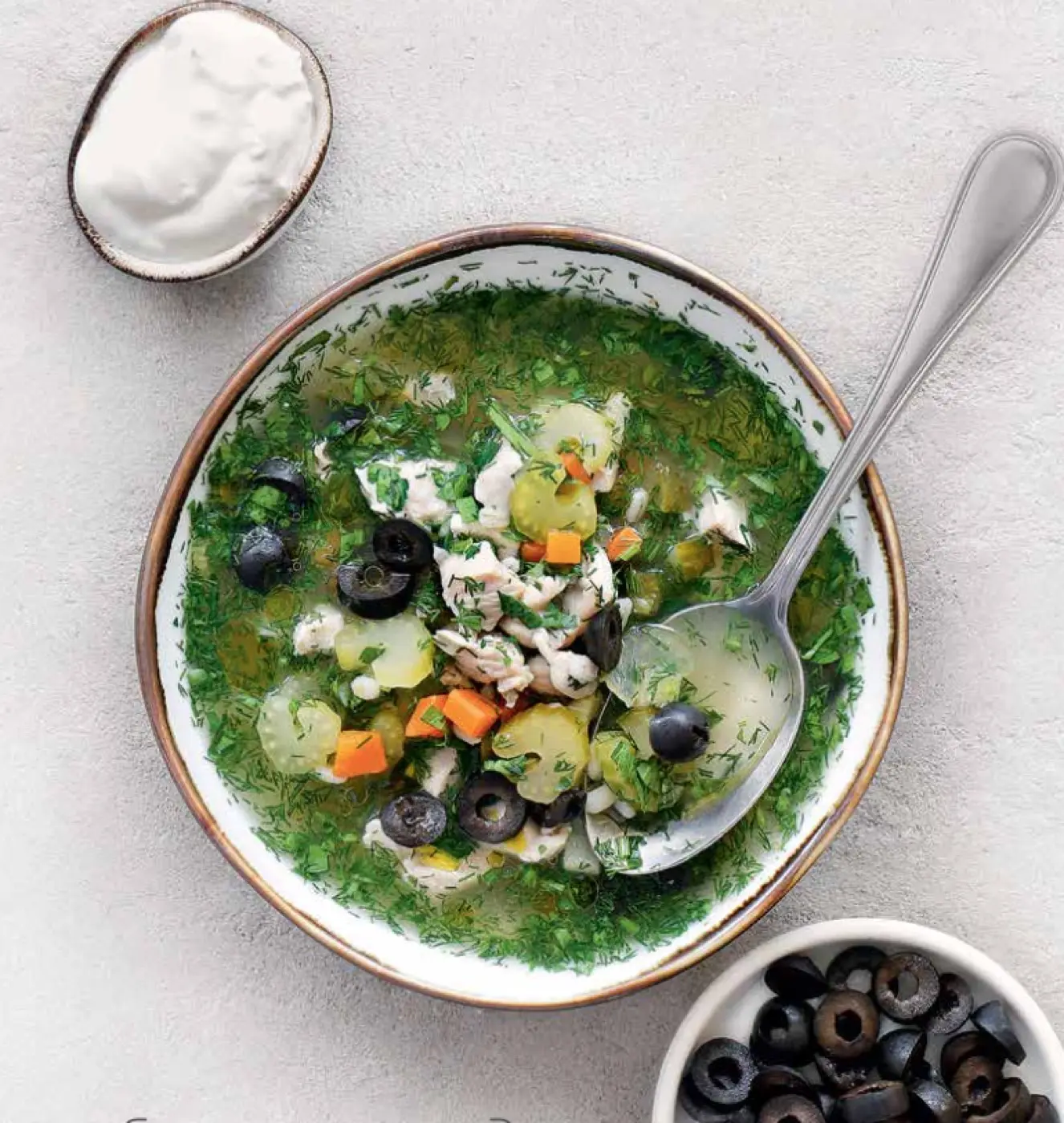
- Servings
- 6–8
- Cooking time
- 1 h
Ingredients
- 150 g pearl barley
- 500 g chicken or turkey breasts
- 1 large potato
- 2 medium carrots
- 3–4 pickled cucumbers or slices of pickled celery
- 6 sprigs of dill or parsley (or 2 tsp dried dill or parsley)
- 400 g pitted black olives, for serving
- 200 g sour cream, for serving
- salt, to taste
- freshly ground black pepper, to taste
Method
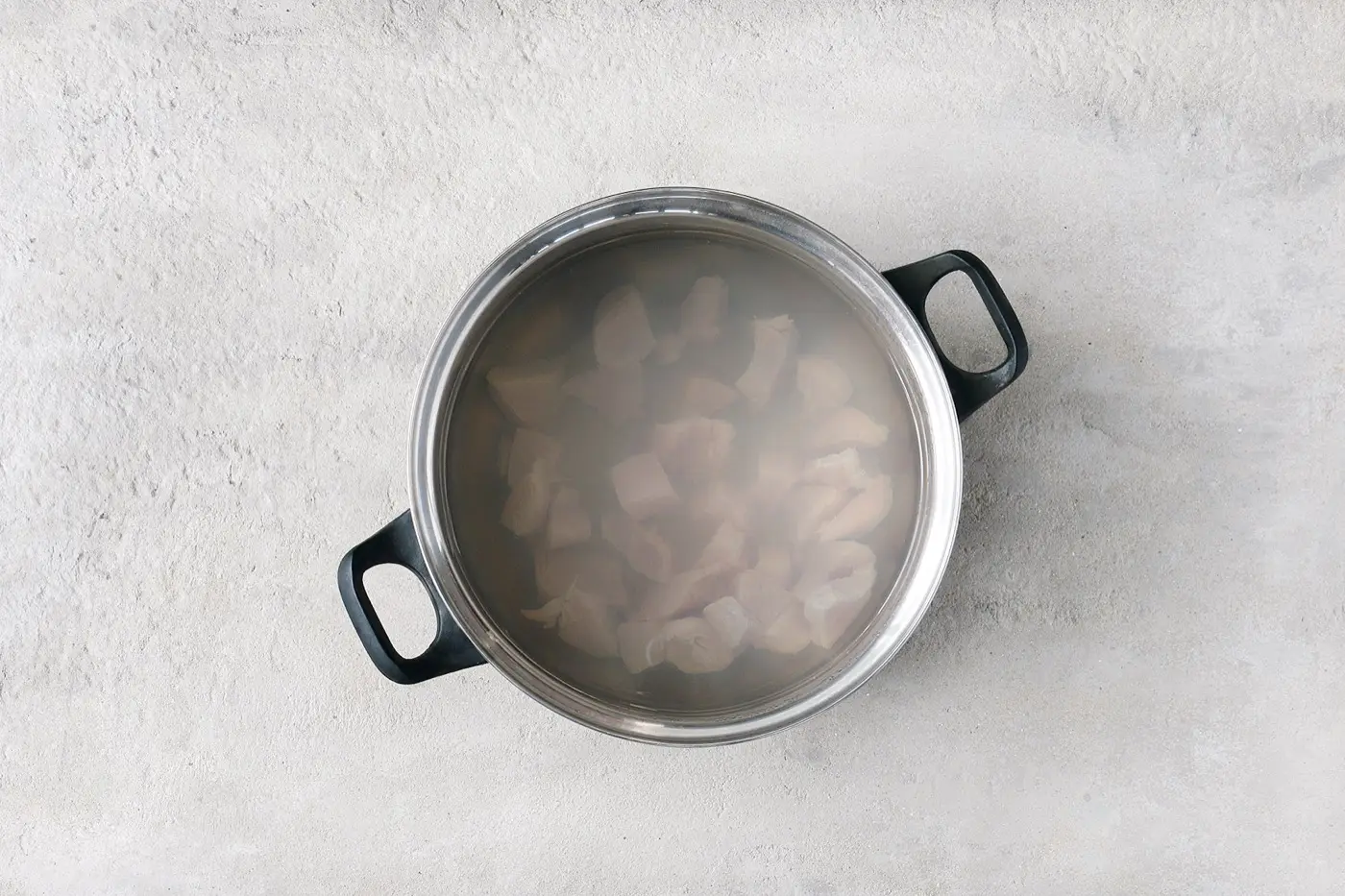
- Rinse the breasts and cut them into medium, bite-sized pieces. Bring 2 l of water to a boil in a pot, add the breasts, skim off the foam and cook the chicken for 2–3 min.
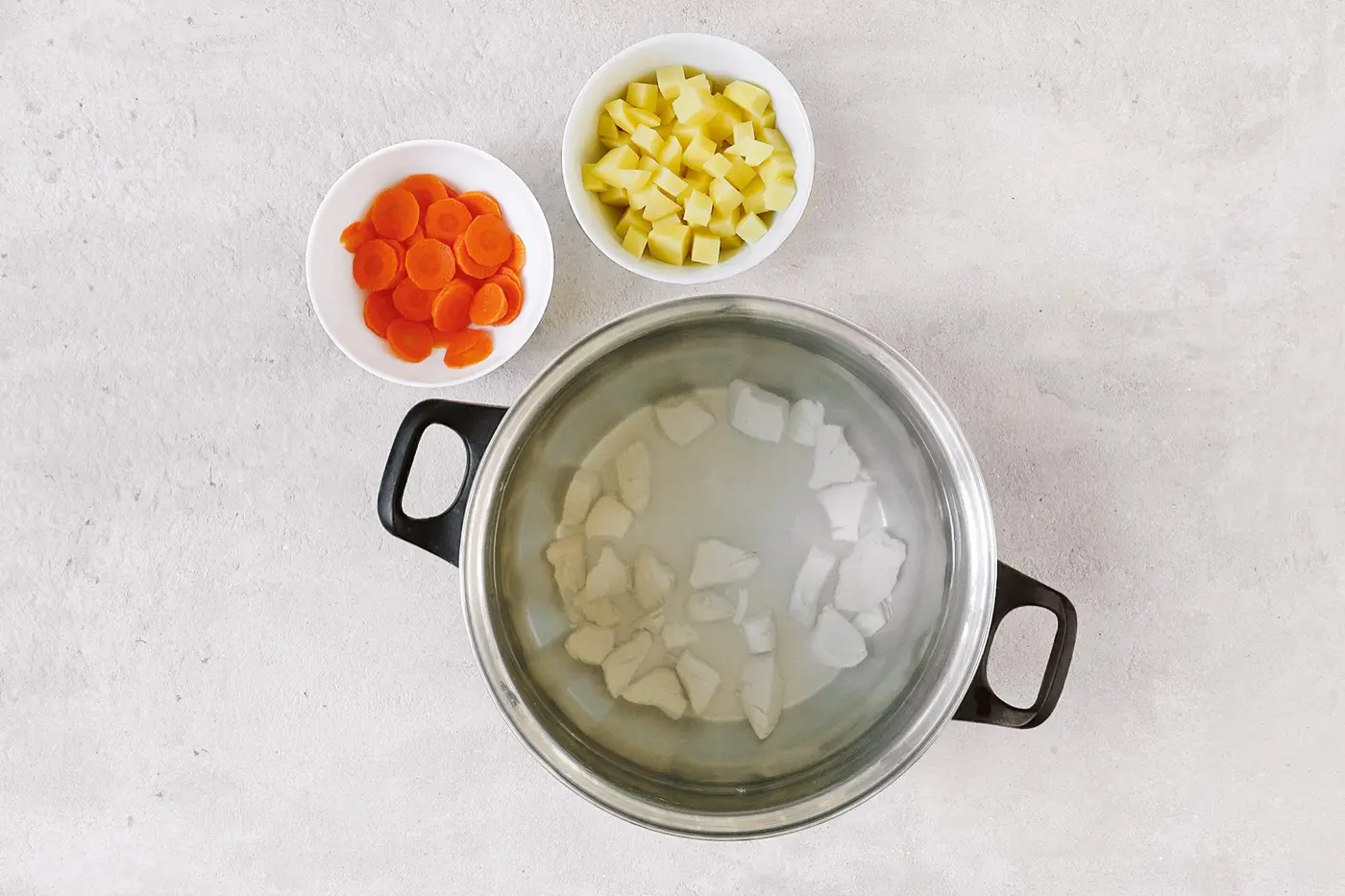
- Peel and cut the potato and carrots: the potato into cubes, the carrots into rounds or cubes. Add the vegetables to the pot and bring the soup back to a boil.
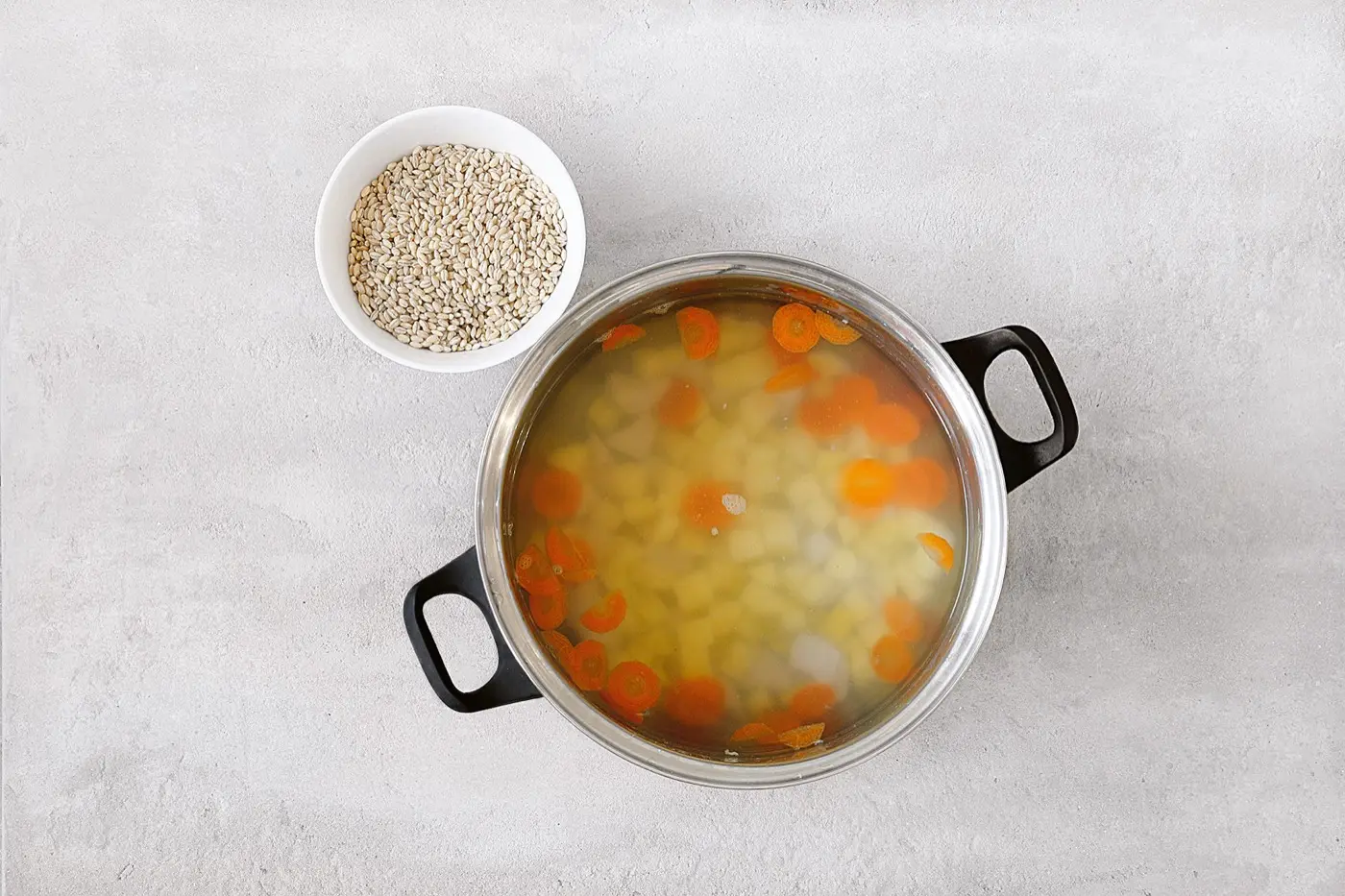
- Rinse the pearl barley thoroughly and add it to the soup. Cover the pot with a lid and simmer the soup over low heat for 20–25 min.
- Cut the pickled cucumbers or celery into small cubes and add them to the soup. Season with salt (remember that the soup already contains the pickles or celery) and pepper, bring the rassolnik to a boil and remove from the heat.
- Finely chop the fresh dill (parsley) and add it to the soup (or add the dried herbs). Let the rassolnik stand, covered, for 5 min, then ladle it into bowls and serve. If you like olives, you can serve the soup with olives sliced into rings, and with sour cream.
Notes
- If you want the meat or chicken that the soup broth is made from to stay juicy, cover it not with cold water but with rapidly boiling water, and bring it to a boil over high heat. Once you have skimmed off the foam, you can lower the heat. The secret is simple: boiling water makes the animal protein coagulate, so every piece of meat gets coated with a thin film of protein. It “seals” the meat, as it were, keeping the juices from running out. As a result, the cooked meat stays tender and flavorful, without that taste of withered grass (I find the comparison fitting). This method is especially good for chicken breast, which many people consider rather dry and try to use as seldom as possible.
- As for the eternal debate over when it is best to salt meat, cooks still haven’t reached a consensus. Personally, I side with those who add salt shortly before the end of cooking.