Baking & Desserts
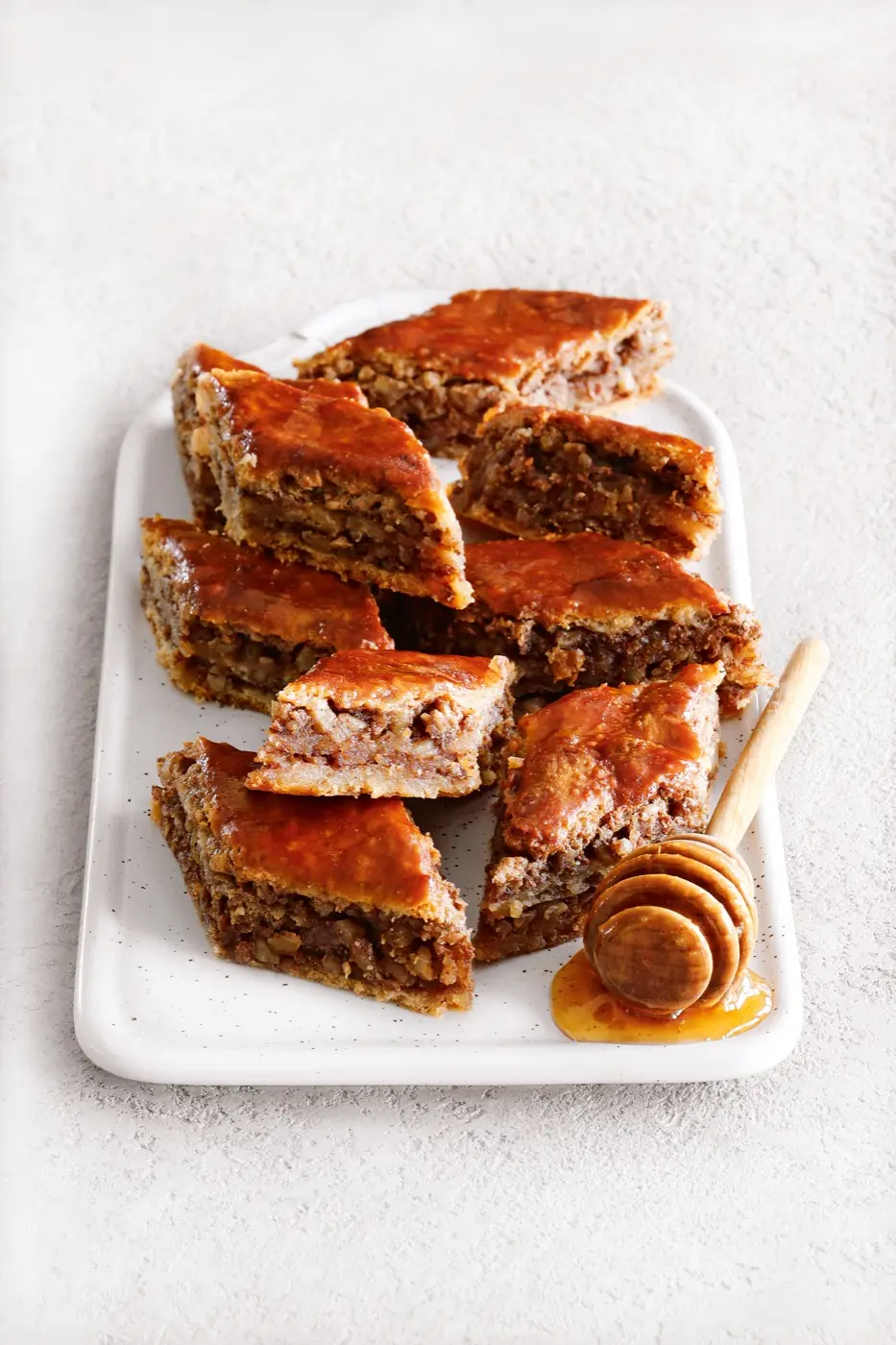
Sochi Pakhlava. Made with chopped pastry dough
- Servings
- 36
- Proofing
- 1 h
- Cooking time
- 2 h 15 min
Ingredients
For the dough:
- 360 g all-purpose flour (2 glasses), plus 40 g for rolling out
- 200 g butter (82.5% fat)
- 150 g sour cream (20%)
- 2 egg yolks
- 1/2 tbsp sugar (10 g)
- 1 pinch of salt
- 1/2 tsp baking soda
- 1 sachet of vanillin (2.5 g)
- 2 tbsp white vinegar (20 g)
For the filling:
- 400 g shelled walnuts
- 5 egg whites (105–175 g)
- 140 g sugar (1/2 glass)
- 1 tsp cinnamon (or vanillin)
- 1/2 tsp ground cardamom
- 1/4 tsp ground cloves
For brushing:
- 2 egg yolks
- 100 g butter
For the syrup:
- 1/2 glass water (150 g)
- 125 g honey
- 70 g sugar (1/4 glass)
Method
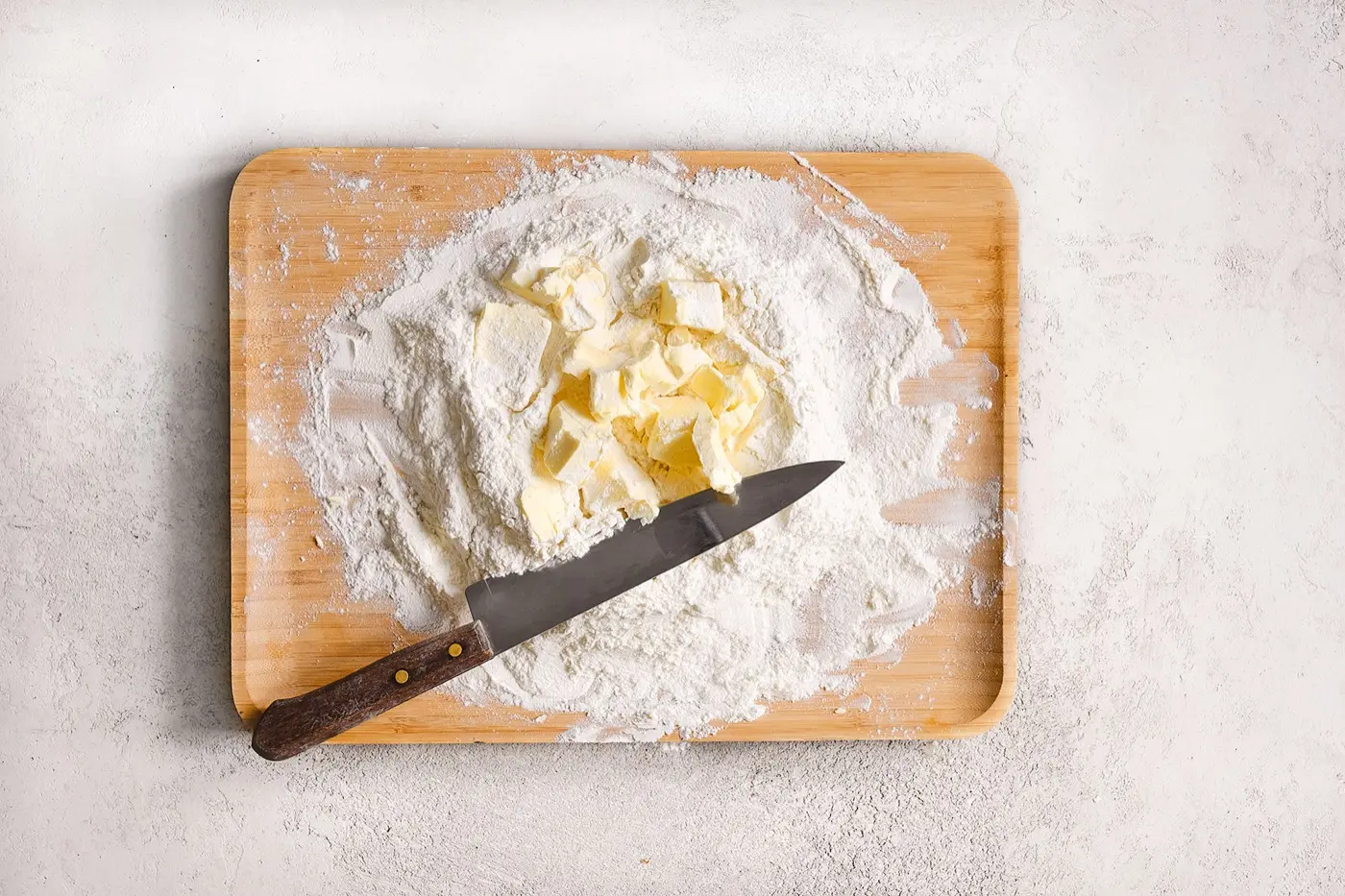
- For the dough, chop the flour and butter together until uniform and gather the mixture into a mound. Make a well in the center, like a “crater,” large enough to hold all the remaining ingredients.
- Put all the dough ingredients except the vinegar into the “crater.” Mix the contents of the “crater” with a knife, then add the vinegar — it will start to fizz.
- Using the knife, gradually work the flour from the outer edges of the “crater” into the center, mixing until uniform.
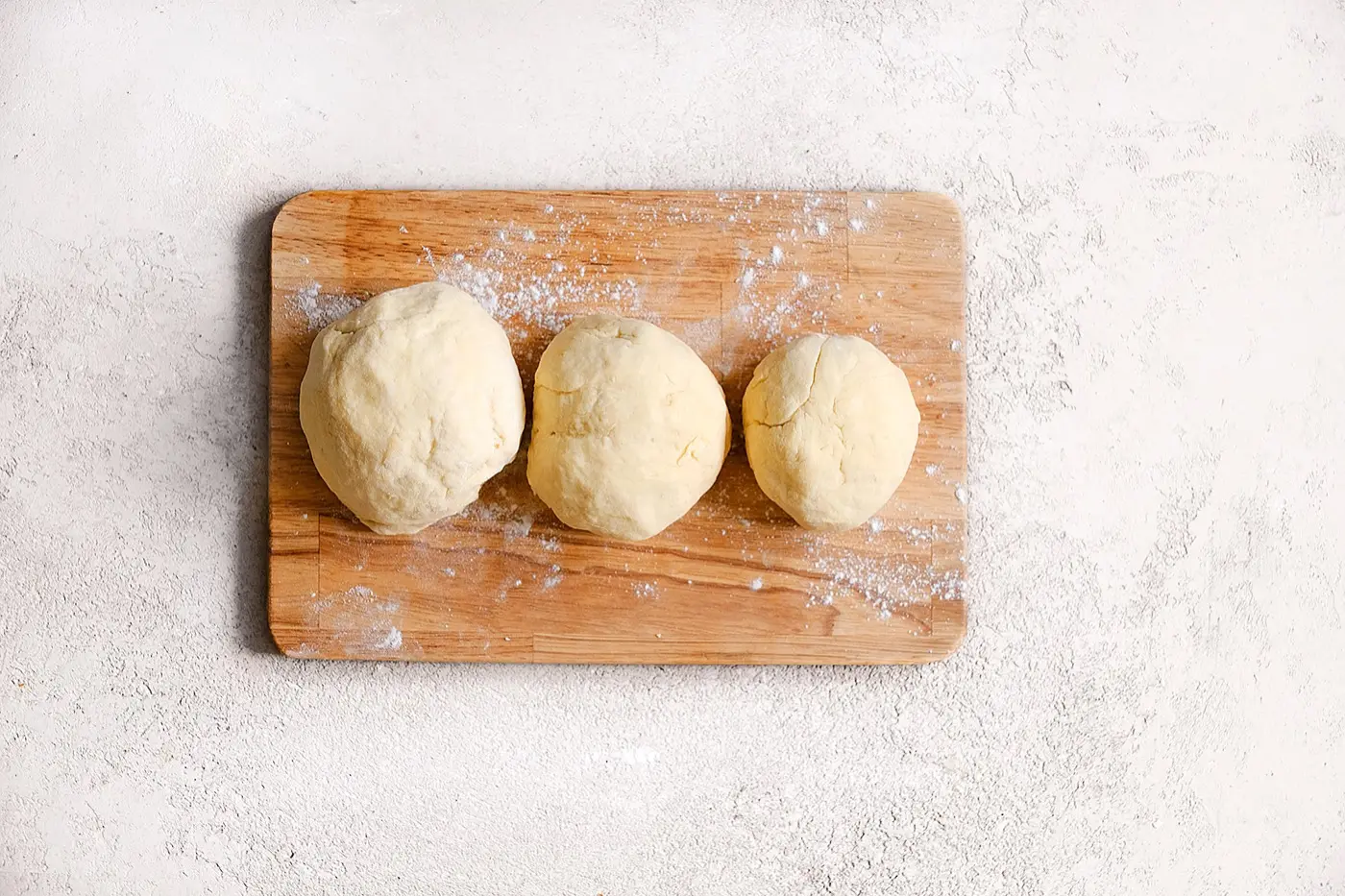
- Cut through the resulting dough several times and gather it back into a ball, kneading. Divide the dough into 3 unequal pieces, in proportions like a snowman. Cover all 3 pieces with plastic wrap pressed directly onto the surface and refrigerate for 1 h.
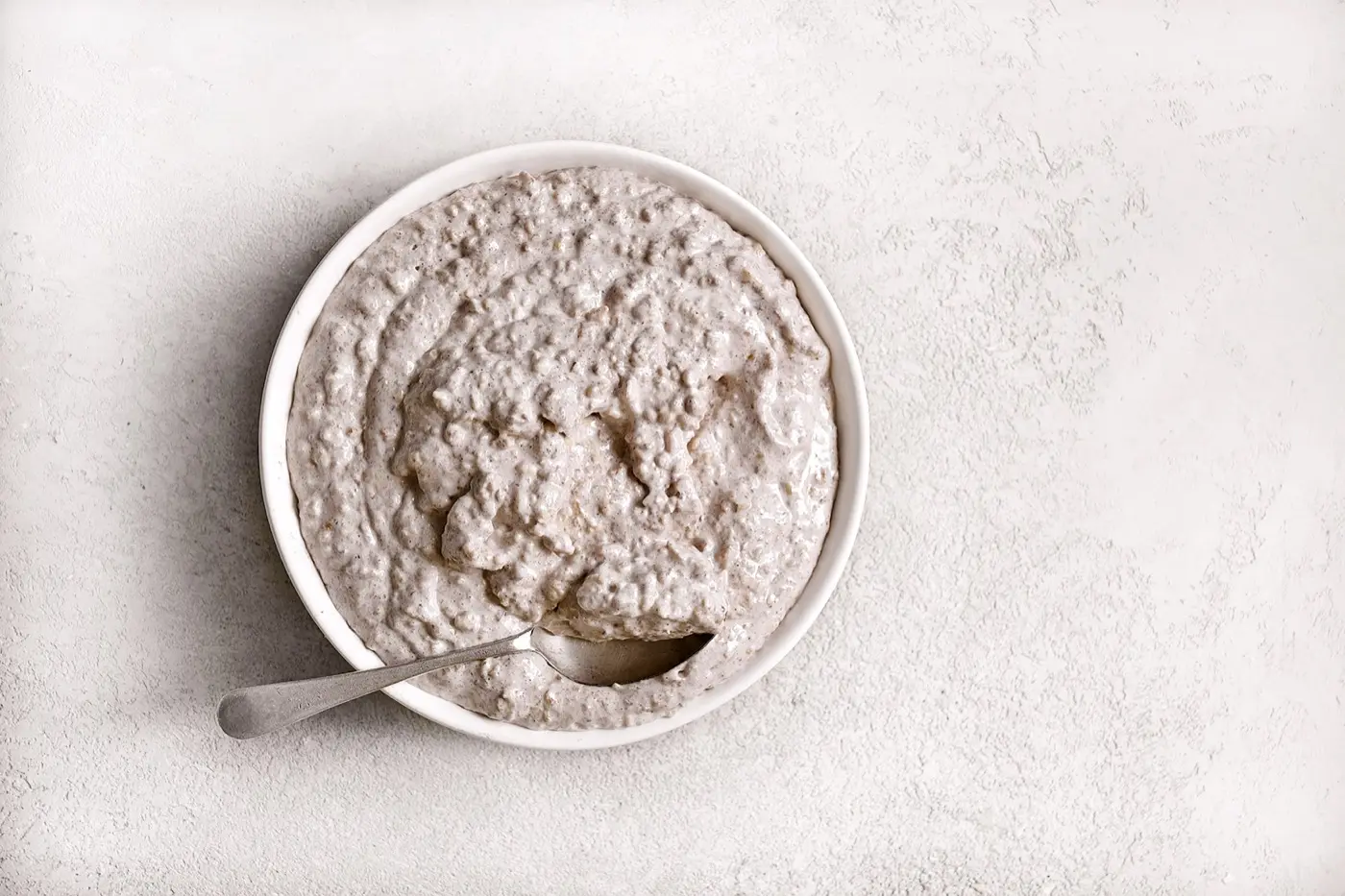
- Meanwhile, make the filling. Finely chop the walnuts. Pour the egg whites into a clean, dry mixer bowl and beat into a thick white foam. Gradually add the sugar, beating to stiff peaks.
- Mix the resulting meringue with the chopped walnuts and spices to taste. If you don’t like cinnamon, replace it with vanillin. Divide the filling into 2 equal parts.
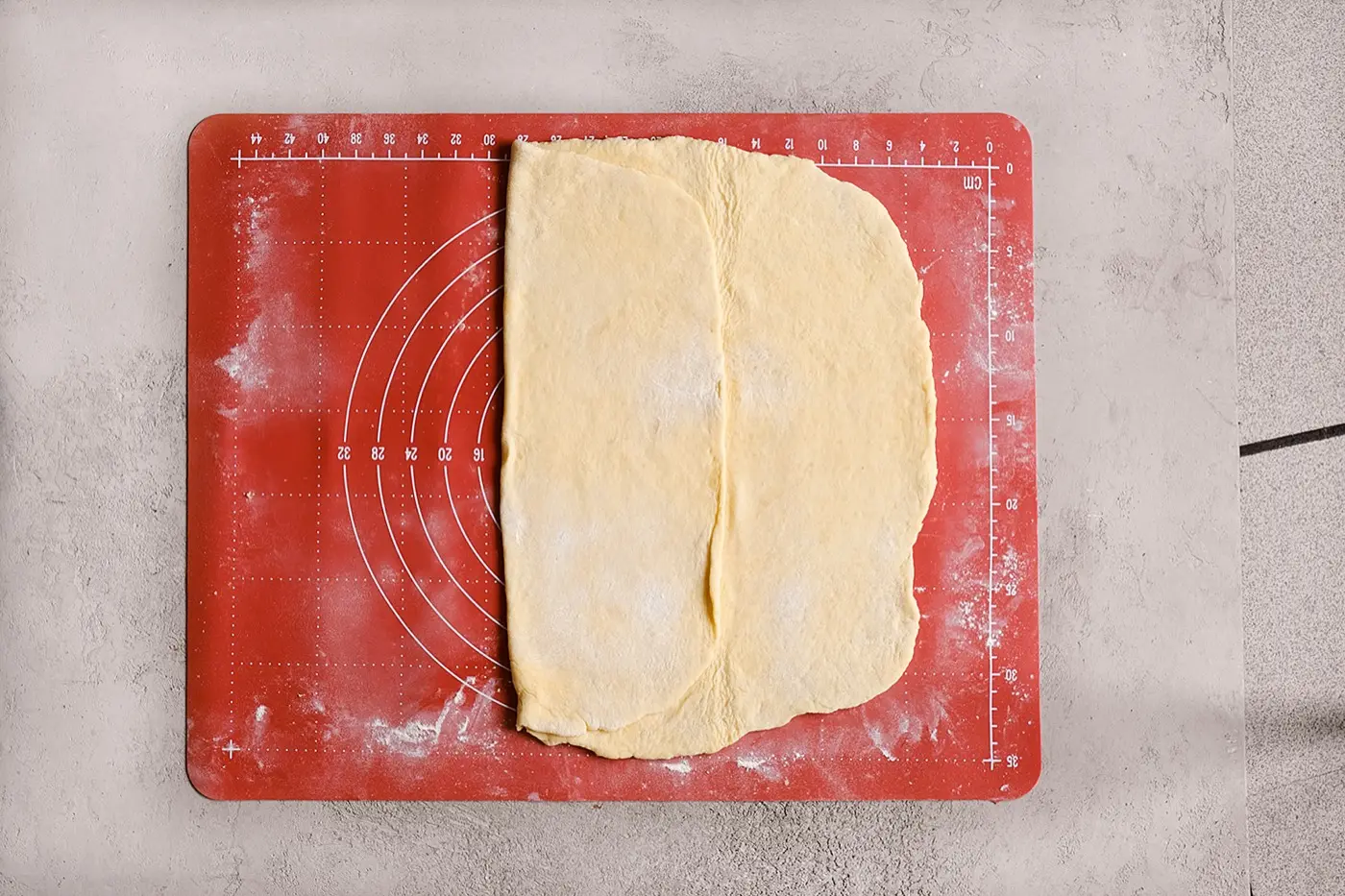
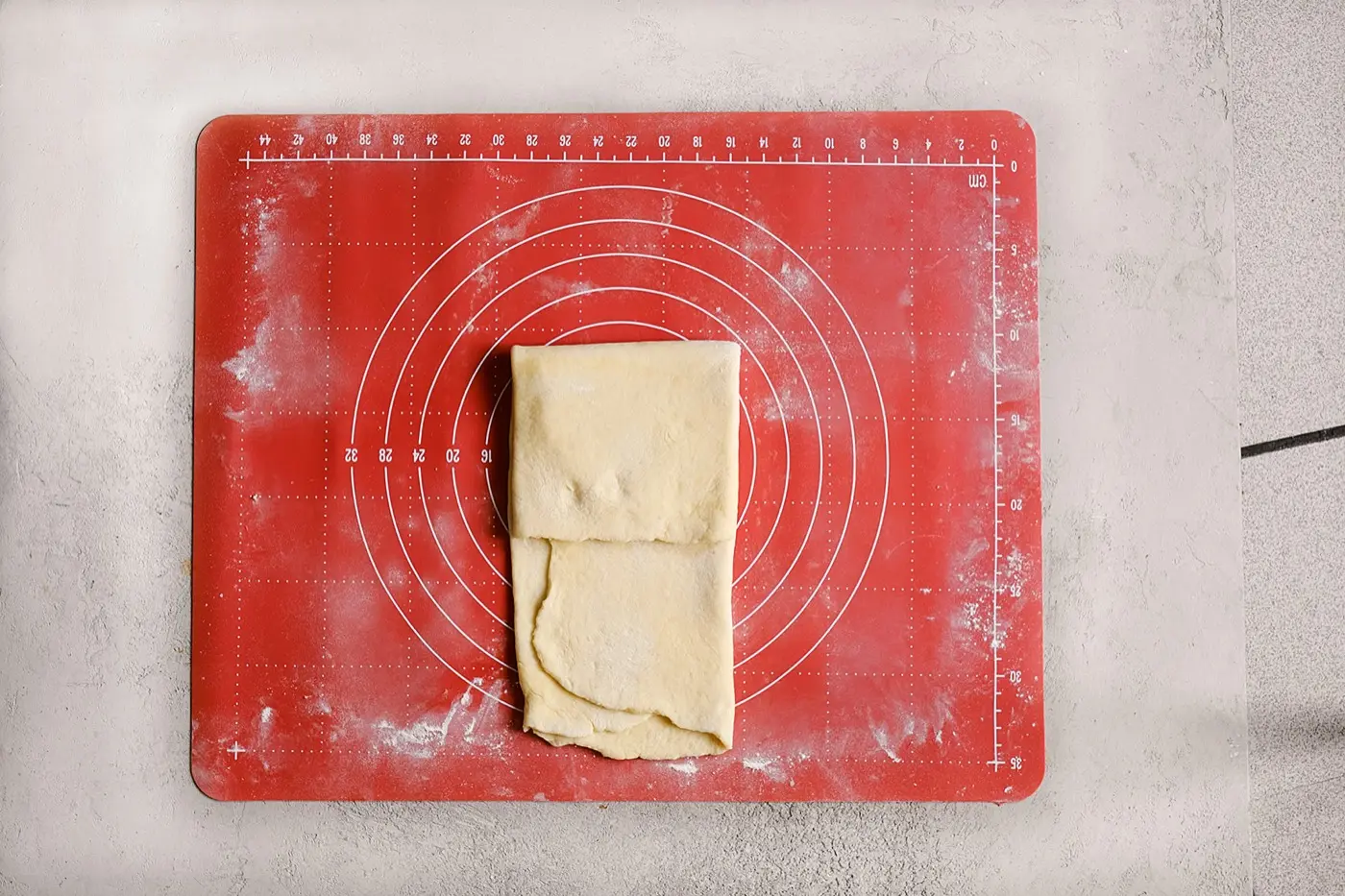
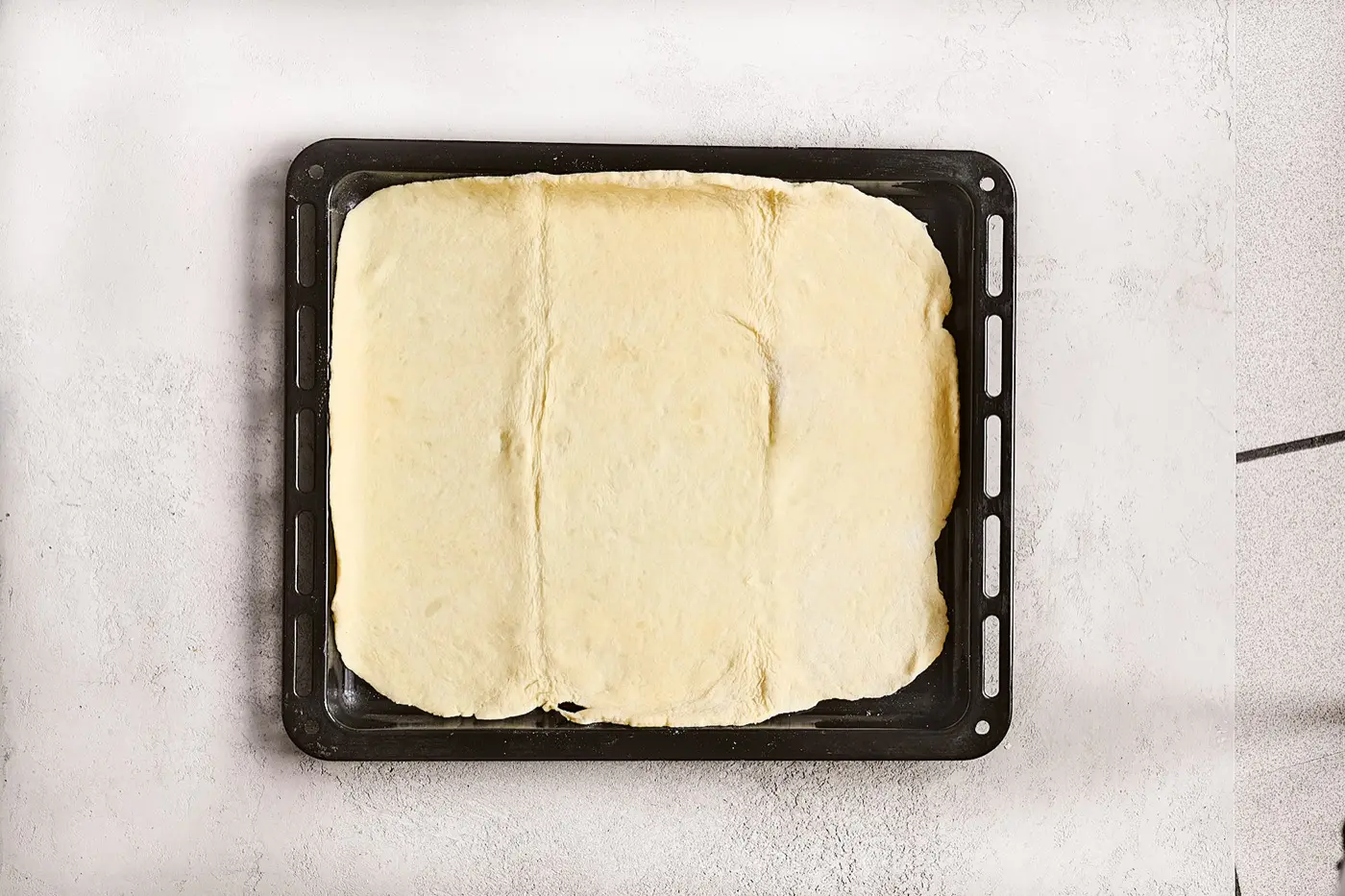
- On a floured surface, roll out the largest piece of dough into a sheet slightly larger than the baking sheet, so that you can form sides. Fold the rolled-out sheet: fold both narrow edges toward the center and fold the dough in half, then turn the dough 90° and repeat the folding. Transfer the folded dough to the center of the baking sheet and unfold it (the edges of the dough should form sides so that the filling doesn’t leak out).
- Preheat the oven to 220 °C. On a floured surface, roll out the smallest piece of dough to the size of the baking sheet. Fold it the same way, transfer it to a second baking sheet and unfold. Prick the layer all over with a fork and bake for 10–15 min.
- While this layer is baking, roll out the medium piece of dough on a floured surface. Try to use as little flour as possible on the top side of this layer. If you don’t have a second baking sheet, bake the second layer first and set it aside.
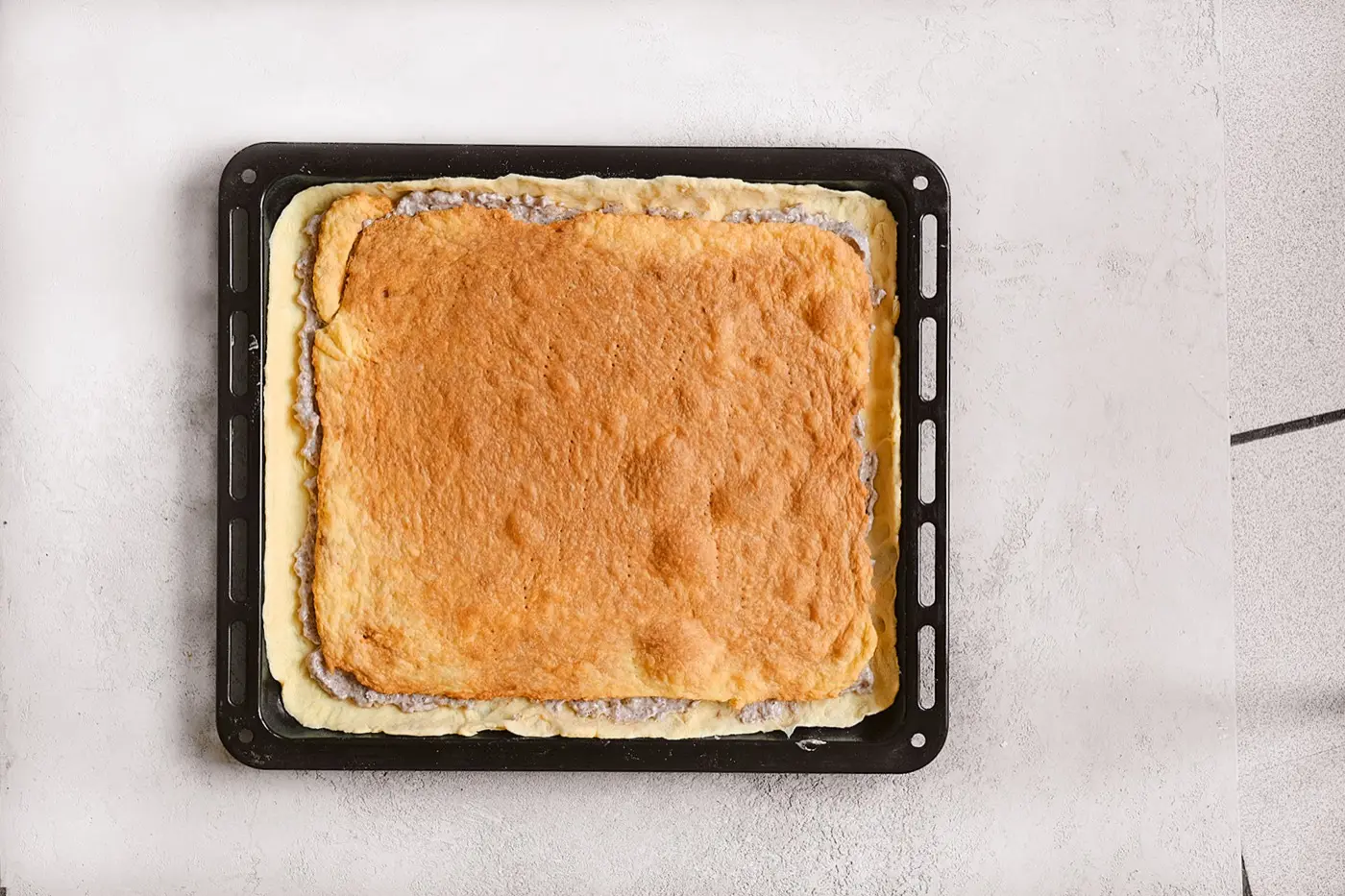
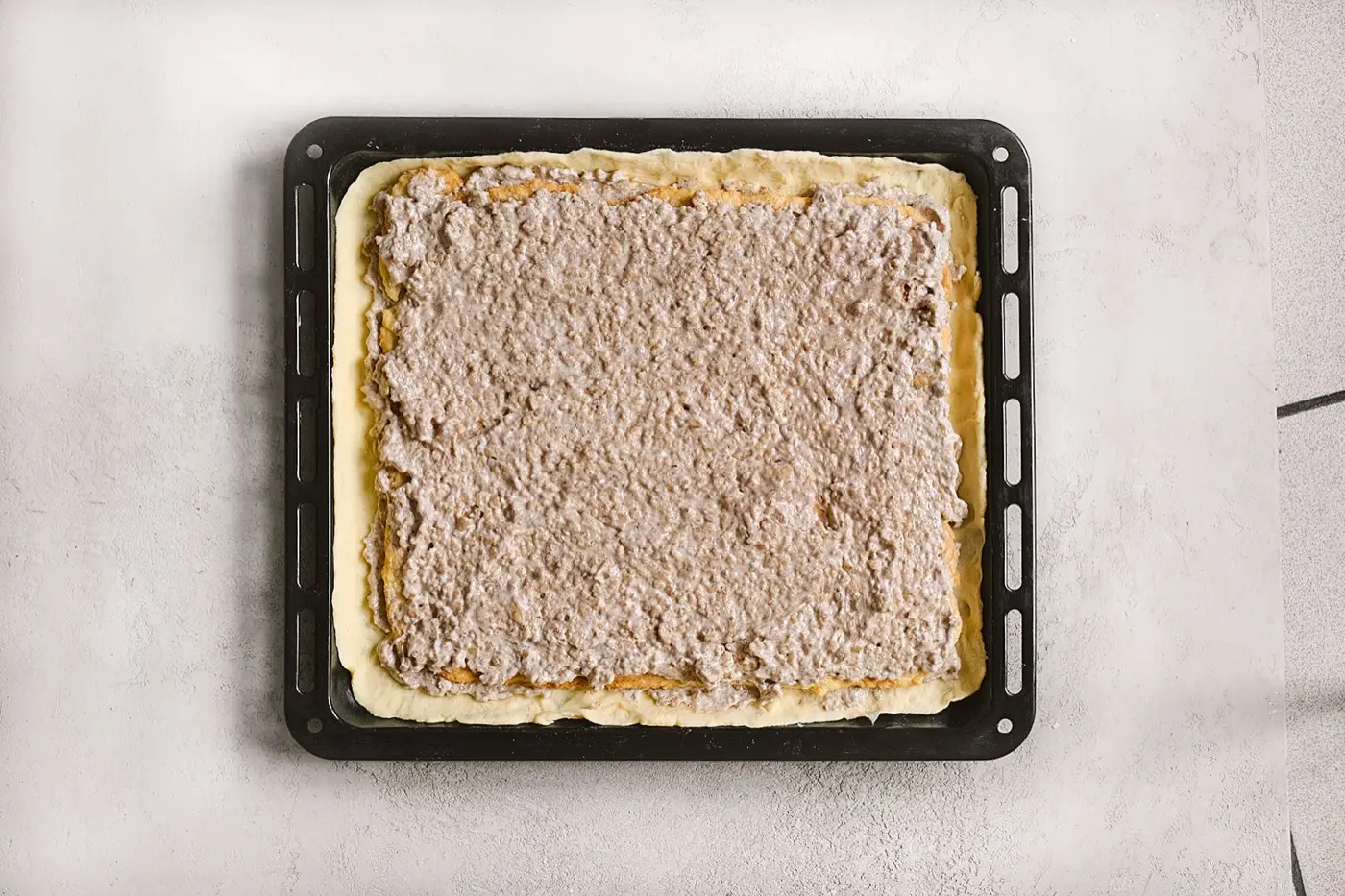
- Spread half of the filling evenly over the bottom, largest layer. Place the smallest, baked layer on top and spread it with the second half of the filling. Fold the third layer and transfer it on top. Carefully unfold the dough, trying not to tear it, and brush it with the beaten egg yolks using a pastry brush.
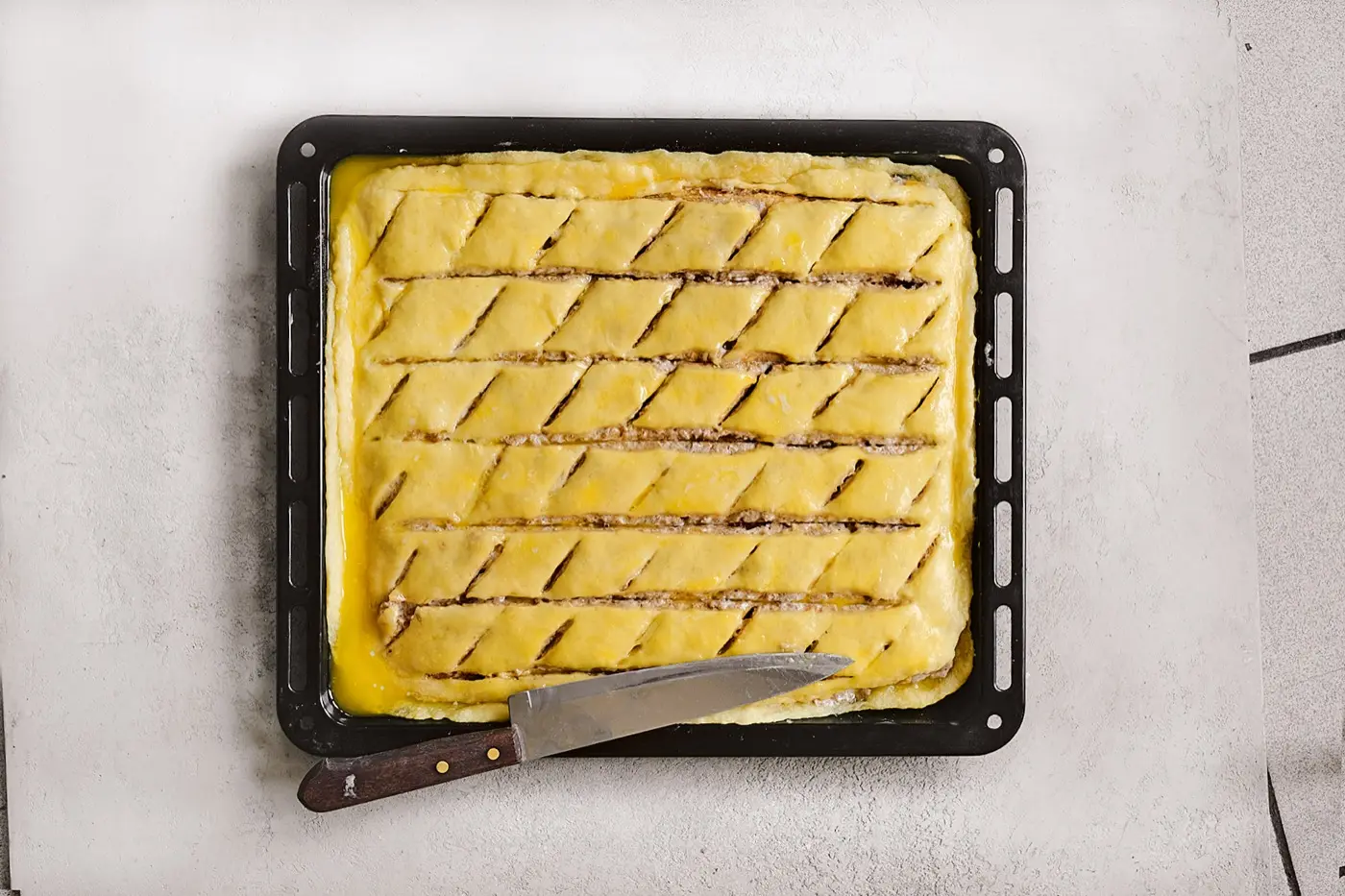
- The pakhlava must be cut while it is still raw; try not to cut through the bottom layer so that the filling doesn’t leak out. First score the pakhlava lengthwise into 6 equal strips (depending on the size of the baking sheet), leaving 1 cm from the side edges. Then turn the baking sheet 90° and score the pakhlava across the middle at a 45° angle. Then score each half into 3 parts.
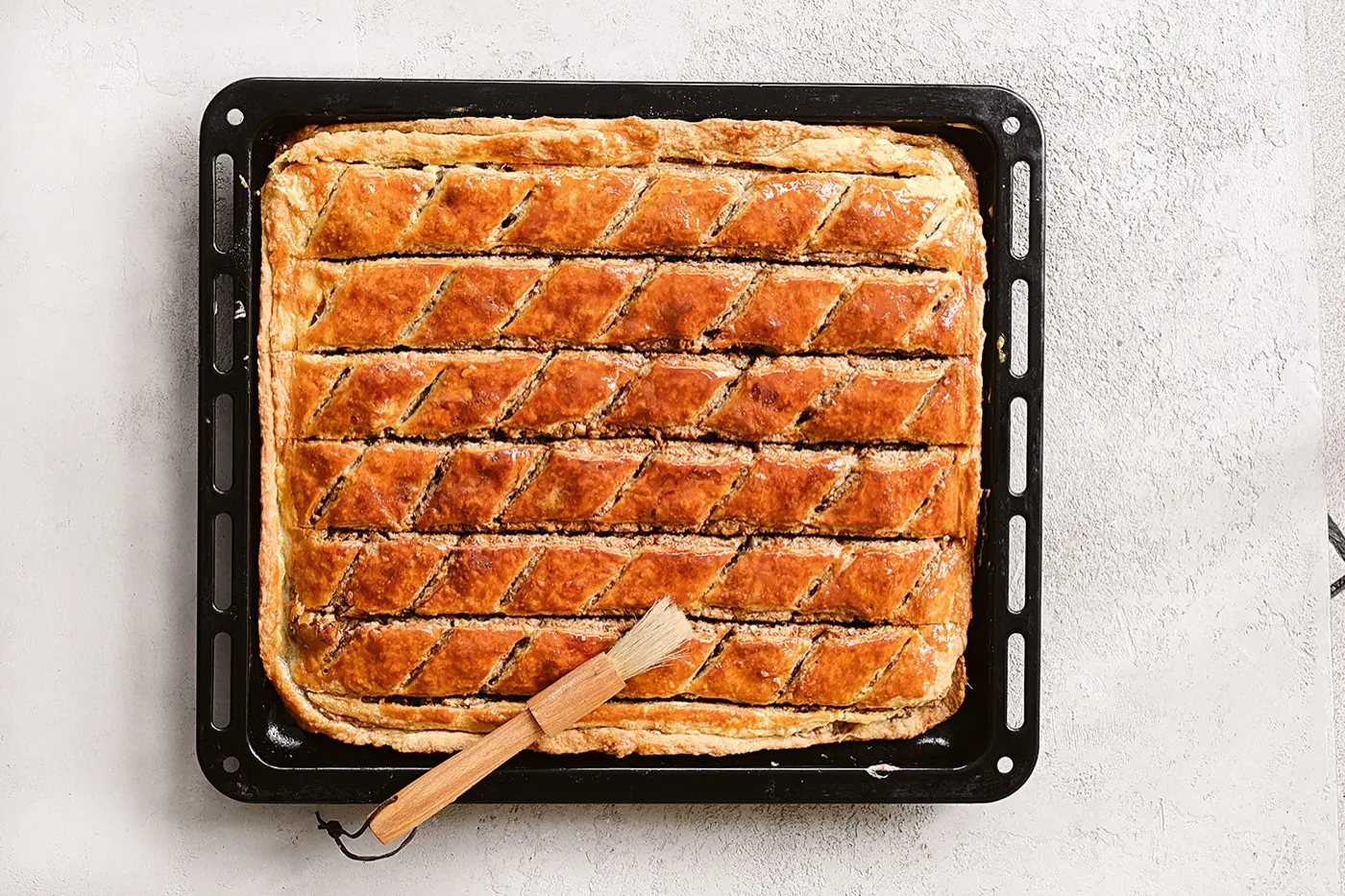
- Form the sides of the pakhlava, put the baking sheet into the oven and bake for 5–10 min. As soon as the dough sets, take out the baking sheet, brush the pakhlava with butter and run a knife along the cuts again — the dough may have stuck together during baking. Reduce the oven temperature to 180 °C and bake the pakhlava for another 30 min — the butter on the surface should bubble. Take out the baking sheet and cut the pakhlava all the way through.
- For the syrup, pour the water into a saucepan, add the sugar and bring to a boil. Add the honey and bring to a boil again (the honey will, of course, lose some of its beneficial properties, but the pakhlava will keep for almost a month).
- Pour the syrup evenly over the pakhlava and let it cool. Then cut through the pieces once more, arrange on a platter and serve. Or put this Eastern sweet into a food container and store until serving.
Notes
- The pakhlava dough (a chopped, yeast-free pastry) can also be used to make khachapuri: divide it into two unequal parts and grate 700–900 g of suluguni cheese (or mozzarella) for the filling. You can mix it half-and-half with Imeretian cheese. This kind of khachapuri is convenient because you can make it in advance and reheat it when the guests arrive.
- You can use any other filling: meat, cabbage, or potato and mushroom.